Muskogee plant effected by damaging flood

How Proper Linen Handling Supports Infection Control in Healthcare Facilities

Clean healthcare linens prepped for transport.

How Proper Linen Handling Supports Infection Control in Healthcare Facilities

Infection prevention in healthcare involves far more than hand hygiene, surface disinfection and personal protective equipment. Textiles move throughout a healthcare facility every day, from patient rooms and surgical areas to storage spaces, laundry collection points and treatment areas. How those textiles are handled at each stage matters.

Healthcare-associated infections remain a significant patient safety concern. According to new data released by the Centers for Disease Control and Prevention (CDC) in July 2026, approximately 1 in 38 hospitalized patients had at least one healthcare-associated infection on any given day in 2023. The CDC estimates that approximately 518,000 healthcare-associated infections occurred in U.S. hospitals that year.

While healthcare textiles are not considered a primary source of most healthcare-associated infections, proper linen management remains an important component of a facility’s overall infection prevention program. Effective processing is only one part of the equation. Healthcare linen must also be collected, transported, stored and handled properly to maintain cleanliness throughout its entire journey.

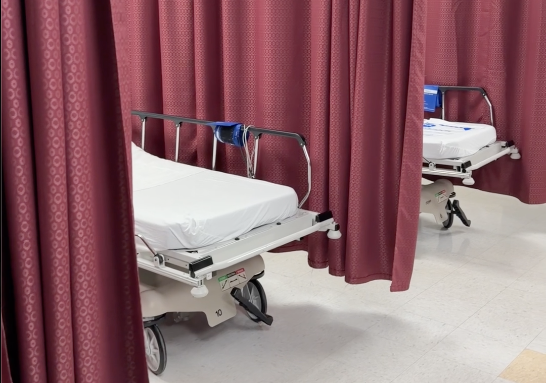
Healthcare privacy curtains and patient beds in a clinical care environment.
Healthcare textiles move through patient-care environments every day, making proper processing, handling and storage an important part of a facility’s infection prevention practices.

Infection Prevention Begins With Proper Handling of Soiled Linen

The linen process begins before textiles ever reach the laundry.

Sheets, towels, gowns and other reusable textiles may become contaminated with blood, body fluids, microorganisms or other potentially infectious material during patient care. The way these items are handled can affect both employee exposure and environmental contamination.

The Occupational Safety and Health Administration’s Bloodborne Pathogens Standard requires contaminated laundry to be handled as little as possible and with minimal agitation. OSHA also requires contaminated laundry to be bagged or containerized where it was used rather than sorted or rinsed in the patient-care area. For wet contaminated laundry that could soak through a bag or container, OSHA requires containment that prevents leakage to the exterior.

These practices help establish a clear barrier between contaminated textiles and the people and environments they encounter before processing.

Best practices for handling soiled healthcare linen include:

  • Bag or contain soiled linen at the point of use.
  • Avoid shaking or unnecessarily agitating contaminated textiles.
  • Do not sort or rinse contaminated laundry in patient-care areas.
  • Use appropriate leak-resistant containment when textiles are wet or heavily contaminated.
  • Follow facility procedures for labeling or color-coding contaminated laundry.
  • Use appropriate personal protective equipment when employees handle contaminated linen.
  • Keep soiled and clean textile workflows clearly separated.

These steps are not simply laundry procedures. They are part of a broader system designed to reduce opportunities for contamination and occupational exposure.

What Does “Hygienically Clean” Mean?

Healthcare textiles generally do not need to be sterile unless they are intended for procedures requiring sterility. They do, however, need to be hygienically clean.

The CDC specifically distinguishes between sterilized textiles and hygienically clean textiles, which are appropriately laundered but not sterilized. In fact, CDC guidance recommends hygienically clean textiles for neonatal intensive care units while reserving sterilized textiles, surgical drapes and gowns for situations in which sterility is required.
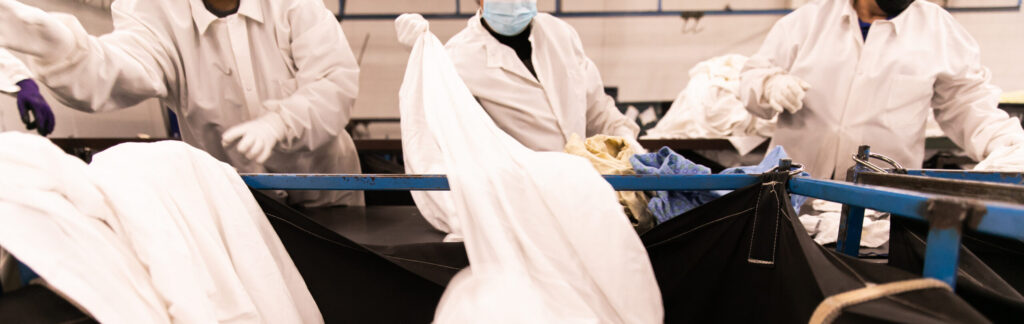
Superior Linen Service employees processing healthcare textiles
Healthcare textile processing requires controlled procedures designed to produce hygienically clean textiles for patient-care environments.

Achieving hygienically clean linen depends on a controlled laundering process that combines the appropriate wash chemistry, temperature, mechanical action, time and drying procedures.

For traditional hot-water healthcare laundry cycles, CDC guidance specifies washing with detergent at 160°F (71°C) or higher for at least 25 minutes. The CDC also recognizes properly designed lower-temperature processes when appropriate chemicals are used at the correct concentrations.

This distinction is important. Temperature alone does not determine whether a textile has been properly processed. A healthcare laundry operation depends on a complete, controlled process designed around textile type, soil level, wash chemistry, equipment and established procedures.

Processing Is Only Part of the Linen’s Journey

A properly laundered textile can still be exposed to contamination after it leaves the wash process. That is why healthcare linen management must account for the entire textile lifecycle, including:

Collection → Processing → Finishing → Packaging → Transportation → Storage → Distribution → Patient Use

The CDC recommends packaging, transporting and storing clean healthcare textiles in ways that maintain their cleanliness and protect them from dust and soil during loading, transportation and unloading. This means infection-conscious linen management does not end when a towel, sheet or gown comes out of the laundry clean.

Clean textiles need to stay clean until they reach the patient or healthcare worker who will use them.

Protecting Clean Linen During Transportation

Transportation represents an important transition between the controlled laundry environment and the healthcare facility.

Clean healthcare textiles should be protected from unnecessary environmental exposure while being loaded, transported and delivered. Processes should also prevent clean textiles from coming into contact with soiled textiles or contaminated surfaces.

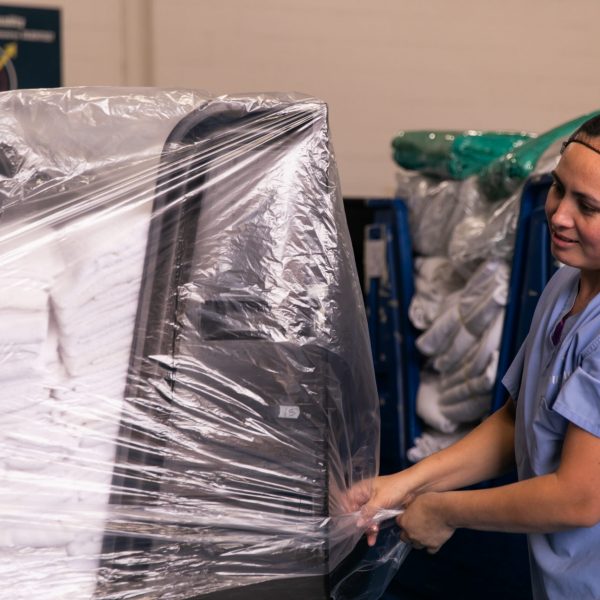
Superior Linen Service healthcare textile cart at laundry facility
Dedicated healthcare textile equipment and defined handling procedures help maintain separation and protect textiles as they move through the service process.

For healthcare facilities evaluating a linen provider, it is worth looking beyond the wash process and asking questions about the complete delivery system:

  • How are clean textiles protected during transportation?
  • How are clean and soiled products separated?
  • How are carts, containers and transportation equipment maintained?
  • What procedures are used during loading and unloading?
  • What quality controls are followed from processing through delivery?

The answers provide a more complete picture of how a laundry provider approaches healthcare textile hygiene.

Clean Linen Storage Matters Inside the Healthcare Facility

Once clean linen has been delivered, responsibility for protecting it continues inside the facility.

Storage areas should be managed to reduce exposure to dust, soil, moisture, unnecessary handling and other potential sources of contamination. Clean textiles should remain separate from soiled linen and other contaminated materials.

Healthcare employee retrieving clean scrubs from organized linen storage
Proper storage and handling help protect clean healthcare textiles until they are ready for use in patient care.

Healthcare teams should also consider how linen moves from central storage to individual departments and patient-care areas. Every additional touchpoint creates another opportunity for unnecessary handling.

Simple operational practices can make a meaningful difference:

  • Keep clean linen in designated clean storage areas.
  • Separate clean and soiled linen throughout the facility.
  • Avoid placing clean textiles on floors or potentially contaminated surfaces.
  • Limit unnecessary handling of clean linen.
  • Keep storage areas clean, dry and organized.
  • Use clean hands when distributing or handling clean textiles.
  • Avoid overstocking patient rooms or treatment areas with more linen than is reasonably needed.
  • Establish clear procedures for linen that enters a patient-care space but is not used.

Facility-specific policies should always be developed in coordination with infection prevention and environmental services teams and in accordance with applicable regulations and guidance.

Why Separating Clean and Soiled Linen Is So Important

One of the fundamental principles of healthcare textile management is maintaining separation between clean and contaminated products. That separation should exist throughout the process, not just inside the healthcare facility.

CDC guidance recommends that healthcare laundry receiving areas for contaminated textiles maintain negative pressure relative to clean laundry areas, consistent with applicable facility design standards. This helps reinforce the physical separation between contaminated incoming textiles and processed clean goods.

The same basic principle should continue during transportation, delivery and storage: clean textiles should not retrace the path of contaminated textiles without appropriate controls in place.

For healthcare providers, this makes workflow design an important part of linen management. The location of hampers, collection points, clean linen rooms and distribution carts can either support or complicate infection prevention practices.

Certification Adds Another Layer of Verification

Healthcare organizations should also understand the standards and certifications maintained by their laundry provider.

Superior Linen Service maintains Hygienically Clean Healthcare certification through TRSA, an industry certification program focused specifically on healthcare textile processing.

TRSA defines hygienically clean textiles as textiles that are free of pathogens in sufficient numbers to cause human illness. Its healthcare certification program incorporates documented best management practices, facility inspection and third-party microbial testing.

Certification does not replace the infection prevention procedures used by healthcare facilities. It provides another level of independent verification that a laundry provider has established processes designed specifically for healthcare textile hygiene.

For hospitals, surgery centers, clinics and other healthcare organizations, that verification can be an important consideration when evaluating a textile service partner.

Linen Management Is a Shared Responsibility

A commercial healthcare laundry can establish controlled processes for collecting, processing, finishing, transporting and delivering textiles. But once those products enter a healthcare facility, maintaining their cleanliness becomes a shared responsibility.

Laundry personnel, environmental services teams, nurses, technicians and other staff members may all interact with textiles during their lifecycle.

That makes staff education particularly important.

Employees who handle soiled linen should understand proper containment procedures and occupational exposure requirements. Employees handling clean linen should understand why clean storage, hand hygiene and minimizing unnecessary contact matter.

OSHA requires employees with occupational exposure to blood or other potentially infectious materials to receive training at initial assignment and at least annually thereafter. For facilities where contaminated laundry is part of an employee’s responsibilities, linen-handling procedures should be incorporated into appropriate training and facility protocols.

Small Steps Can Strengthen the Entire Process

Healthcare linen is an everyday operational necessity, which can make its handling easy to overlook. But infection prevention depends in part on consistent processes for routine tasks.

Healthcare facilities can strengthen linen management by periodically reviewing a few fundamental questions:

  1. Is soiled linen contained at the point of use?
  2. Are employees minimizing agitation when handling contaminated textiles?
  3. Are wet or heavily contaminated textiles placed in appropriate leak-resistant containment?
  4. Are clean and soiled linen kept separate throughout collection, transportation and storage?
  5. Are clean textiles protected from dust, moisture and unnecessary handling?
  6. Are linen storage areas clean, organized and appropriately maintained?
  7. Are employees trained on the facility’s linen-handling procedures?
  8. Does the facility’s laundry provider follow documented healthcare-specific processing and handling standards?
  9. Does the provider maintain relevant third-party certifications?
  10. Are linen procedures periodically reviewed with infection prevention and environmental services leadership?

These are relatively simple questions, but together they help evaluate the entire textile management system rather than focusing only on the washing process.

A Healthcare Linen Program Should Protect Cleanliness From Start to Finish

The goal of healthcare laundry service is not simply to make textiles look clean. It is to provide hygienically clean textiles and maintain that cleanliness through processing, transportation and delivery. Healthcare facilities then continue that process through proper storage, distribution and handling.

With an estimated 518,000 healthcare-associated infections occurring in U.S. hospitals in 2023, infection prevention remains an ongoing priority across every area of healthcare operations. Linen management represents one part of that larger effort.

At Superior Linen Service, healthcare textile processing is supported by established procedures, healthcare-focused quality controls and Hygienically Clean Healthcare certification. We work with healthcare organizations throughout Oklahoma, Arkansas, Kansas and Missouri to provide dependable textile programs designed around the unique requirements of patient-care environments.

Looking to evaluate your healthcare linen program?
Contact Superior Linen Service to learn more about our healthcare textile services and Hygienically Clean Healthcare-certified processing.