
Workplace First Aid: What Being Prepared Really Means
Workplace safety is built on preparation. From commercial kitchens and manufacturing facilities to healthcare environments and professional offices, employers put procedures and resources in place to help protect their teams.
But one important part of workplace preparedness can be easy to overlook: the condition of the first aid cabinet. Having first aid supplies available is essential. Keeping those supplies properly stocked, organized, and accessible requires ongoing attention.
But a cabinet that was fully stocked when installed may look very different several months later, especially in a busy workplace where employees regularly use bandages, burn treatments, and other supplies. Understanding what workplace first aid preparedness requires, and how to maintain it, can help businesses take a more proactive approach to employee safety.
What Does OSHA Require for Workplace First Aid?
The Occupational Safety and Health Administration (OSHA) establishes workplace first aid requirements under 29 CFR 1910.151.
For general industry workplaces, OSHA requires adequate first aid supplies to be readily available. The standard also requires adequately trained first aid personnel when an infirmary, clinic, or hospital is not in near proximity to the workplace and available to treat injured employees.
OSHA also explains that larger workplaces or facilities with multiple operations may require additional first aid kits, specialized equipment, or greater quantities of supplies. This means a small professional office may have different first aid needs than a commercial kitchen or industrial facility.
Importantly, OSHA does not prescribe one universal first aid kit that is appropriate for every business. Instead, employers must consider the nature of their operations and the potential injuries employees may encounter.
Understanding ANSI First Aid Standards
While OSHA establishes workplace first aid requirements, the American National Standards Institute (ANSI) and International Safety Equipment Association (ISEA) provide more detailed guidance on first aid kit contents.
The ANSI/ISEA Z308.1-2021 standard identifies two primary classifications:
| Class A First Aid Kits | Class B First Aid Kits |
|
Designed to address common workplace injuries with a basic assortment of first aid supplies. |
Designed for workplaces that may require a broader range or greater quantities of supplies due to employee numbers, operational complexity, or workplace hazards. |
These classifications can help businesses evaluate their first aid needs. However, ANSI kit classification alone does not guarantee compliance with every OSHA requirement. Employers remain responsible for evaluating workplace hazards, ensuring adequate supplies are available, and meeting applicable training and emergency-response requirements.
The goal is not simply to have a compliant-looking cabinet. It is to have appropriate first aid resources available when employees need them.
Why First Aid Cabinet Maintenance Matters
Purchasing first aid supplies is only the beginning.
In busy workplaces, products are used, inventory changes, and expiration dates approach. Without a consistent inspection and replenishment process, a cabinet may no longer contain the supplies employees expect to find.
Consider a restaurant where employees regularly use adhesive bandages and burn supplies. If those items are not replaced, the cabinet may become less useful over time. The same challenge can occur in healthcare facilities, manufacturing operations, and professional offices.
OSHA’s guidance emphasizes the importance of evaluating workplace first aid needs and maintaining adequate supplies.
Five Things Every Workplace Should Check
A practical first aid inspection should answer five questions:
-
- Are essential supplies missing? Frequently used items should be identified and replenished.
- Have any products expired? Supplies should be reviewed for expiration dates and replaced when appropriate.
- Are supplies organized and accessible? Employees should be able to locate the items they need without unnecessary searching.
- Does the cabinet still meet workplace needs? Changes in staffing, equipment, or operations may require different supplies or quantities.
- Is someone responsible for maintenance? A consistent inspection process helps prevent first aid inventory from becoming an overlooked responsibility.
These checks are relatively straightforward, but they require consistency.
Organized Supplies Support a More Prepared Workplace
A first aid cabinet is only as useful as the supplies available inside it. During an emergency, employees should not have to search through a disorganized assortment of products to locate basic first aid supplies.
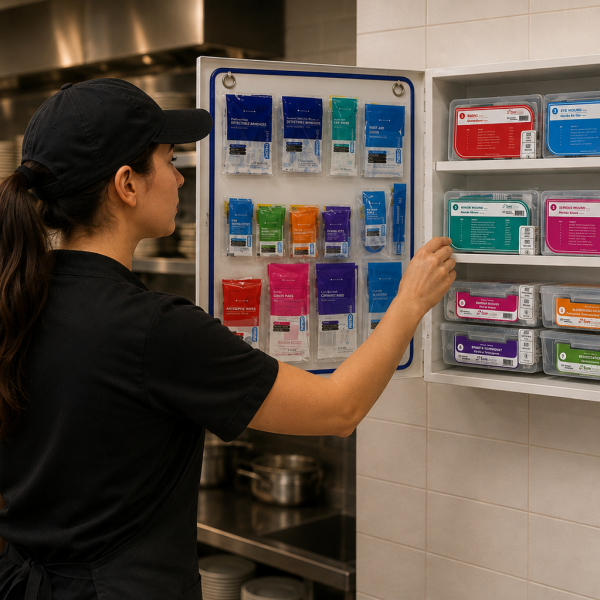
Clearly arranged cabinets can make it easier to identify products and determine when supplies need replenishment. Some modern first aid cabinets use injury-specific modules that group related products together.
For example, supplies may be organized into categories for minor wounds, burns, eye injuries, serious wounds, and bloodborne pathogen response. Larger cabinets may include additional modules for more specialized first aid needs.
This approach can also simplify routine inventory checks by making missing or depleted supplies easier to identify.
The Value of Professionally Managed First Aid
For many business owners and facility managers, first aid inventory is one responsibility among many. Someone must check supplies, monitor expiration dates, identify missing products, order replacements, and maintain the cabinet.
These tasks may seem minor individually, but they require time and attention.
A professionally managed first aid service can help simplify that responsibility through scheduled inspections and replenishment. Rather than relying entirely on internal staff to monitor inventory, businesses can work with a service provider that helps maintain their first aid supplies.
Potential benefits include:
-
- Consistent Replenishment:
-
- Used or missing supplies are identified during scheduled service.
-
- Consistent Replenishment:
-
- Simplified Inventory Management:
-
- Managers spend less time monitoring and replacing first aid products.
-
- Simplified Inventory Management:
-
- Organized Supplies:
-
- Clearly arranged products make inspections and inventory checks more straightforward.
-
- Organized Supplies:
-
- Workplace-Specific Options:
-
- Cabinet sizes and available supplies can be selected based on operational needs.
-
- Workplace-Specific Options:
Managed first aid service does not replace an employer’s responsibility for workplace safety, employee training, or regulatory compliance. It can, however, help support the ongoing maintenance of first aid supplies.
A Simpler Approach to Workplace First Aid
At Superior Linen Service, we understand that maintaining a safe, well-supported workplace involves more than any single product or service. That’s why we’ve expanded our offerings to include professionally managed First Aid Cabinets.
Our program provides small and large cabinet options featuring organized, injury-specific supplies, with optional medications available to meet additional workplace needs. Through scheduled service and replenishment, Superior Linen Service helps businesses keep first aid supplies maintained and ready for use.
The objective is straightforward: provide dependable service that supports workplace preparedness while reducing the administrative burden on business owners and managers.
Is Your Workplace Ready?
Workplace first aid preparedness should not depend on whether someone remembers to check the cabinet. Appropriate supplies, consistent maintenance, and accessible first aid resources are important parts of a workplace safety program.
Whether you manage a restaurant, healthcare facility, manufacturing operation, or professional office, taking time to evaluate your current first aid arrangements can help identify opportunities for improvement.
Learn how Superior Linen Service’s professionally managed First Aid Cabinets can help keep your workplace stocked, organized, and prepared.