
Behind the Scenes of a Linen Service Audit: What It Takes to Be Hygienically Clean Certified
When you hear that a linen service provider is TRSA Hygienically Clean Certified, it is easy to assume it simply means the linens are clean. In reality, that certification represents a detailed and ongoing audit process that evaluates how a facility operates from the moment soiled linens arrive to the moment clean products are delivered back to customers. It is not a one-time inspection. It is a system of verification, documentation, and accountability that must be proven consistently over time.
Understanding what happens behind the scenes during an audit provides a clearer picture of what that certification actually represents and why it matters.
It Starts Before the Audit Even Begins
A successful audit does not begin on inspection day. It starts long before an auditor ever steps into the building. Facilities must maintain detailed, documented processes that outline how textiles are handled at every stage of the operation. This includes procedures for:
- Training employees on hygiene and safety protocols
- Receiving and sorting soiled linens
- Maintaining separation between clean and soiled items
- Monitoring wash formulas and chemical use
TRSA requires that these processes are not only established but consistently followed and documented. Auditors are not simply reviewing policies on paper. They are verifying that those policies are actively used in day-to-day operations. This level of consistency is what distinguishes a certified facility from one that relies on informal or inconsistent practices.
The Facility Walkthrough: Following the Linen Journey
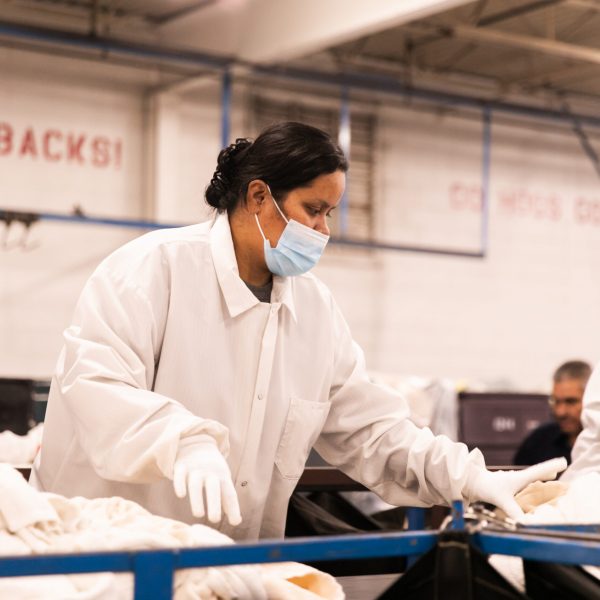
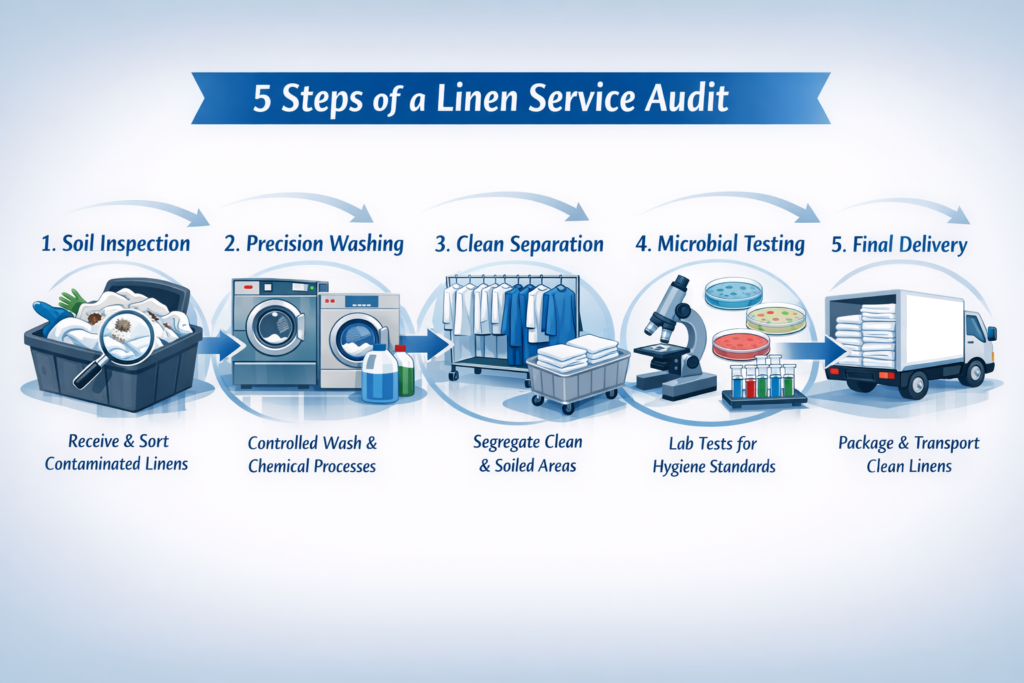
During an audit, inspectors walk through the facility and follow the path of the linen from start to finish. This includes soil sort areas, wash systems, finishing equipment, clean storage zones, and delivery staging areas. The purpose is to evaluate how materials move through the plant and to identify any potential risks of cross contamination.
A key focus during this walkthrough is ensuring there is no point where clean and soiled textiles can come into contact. This concept, known as functional separation, is a core requirement of the Hygienically Clean certification. Auditors evaluate:
- Physical separation between clean and soiled areas
- Employee movement and workflow patterns
- Equipment placement and usage
- Cart flow and staging practices
Even small operational details can impact the integrity of clean product. These observations help confirm that contamination risks are minimized throughout the process.
Documentation Review: Proving the Process Works
Beyond the physical walkthrough, a significant portion of the audit focuses on documentation. Facilities must be able to show detailed records that support how their processes are designed and executed. Auditors review documentation such as:
- Wash formulas and temperature controls
- Chemical dosing logs
- Equipment maintenance records
- Employee training procedures
- Incident tracking and corrective actions
This information confirms that procedures are not only properly designed but consistently followed. Documentation serves as proof that the system works as intended and that any issues are identified and corrected. Without this level of recordkeeping, it becomes difficult to verify that hygienic standards are being maintained over time.
Microbiological Testing: Verifying the Results
One of the most critical components of the Hygienically Clean certification is independent microbiological testing. While processes and documentation are important, the certification ultimately requires proof that those processes are delivering measurable results. Facilities must submit textile samples for laboratory testing to measure microbial presence. These tests confirm that laundering procedures are achieving reductions in bacteria and other microorganisms.
TRSA requires ongoing testing to ensure that facilities consistently meet defined hygienic standards, not just during the audit period but as part of regular operations. This results-based verification is what gives the certification its credibility.
It demonstrates actual performance, not just process compliance.
Employee Practices and Training
The effectiveness of any system depends on the people operating it. For this reason, audits also evaluate employee practices and training programs. Inspectors observe how team members handle soiled textiles, move materials through the plant, and follow established hygiene protocols.
Facilities must demonstrate that employees are trained to:
- Handle soiled textiles safely
- Prevent cross contamination during processing
- Follow proper workflow procedures
- Respond appropriately to potential risks
Training programs must be documented and regularly updated. Consistency in employee behavior is essential for maintaining hygienic conditions, and even well-designed systems can fail if procedures are not followed correctly.
Continuous Improvement and Accountability
Achieving certification is not the end of the process. It is part of an ongoing commitment to maintaining high standards. Facilities must continue to monitor performance, document processes, and address any findings identified during audits. This includes:
- Maintaining performance between audits
- Completing corrective actions when needed
- Continuing documentation and internal checks
- Preparing for re-inspection and re-testing
TRSA’s program is designed to ensure that hygienic quality is sustained over time. The goal is not simply to pass an audit once, but to operate at that level every day.
Why This Matters for Your Business
From the outside, linen service can appear straightforward. Products are picked up, processed, and returned. What is not visible is the level of scrutiny required to ensure those linens are safe, hygienic, and consistently handled.
A TRSA Hygienically Clean Certified provider has demonstrated that:
- Processes are documented and controlled
- Operations are designed to prevent contamination
- Results are verified through testing
- Standards are maintained through ongoing audits
For industries like healthcare, hospitality, and food service, that level of assurance plays an important role in supporting safety, cleanliness, and overall customer experience.
A System You Don’t Have to Think About
For your team, the goal is simple. Linen service should be one less thing to worry about. The systems, audits, and verification processes happening behind the scenes are designed to ensure consistency without requiring your attention.
Working with a certified provider means those safeguards are already in place, allowing you to stay focused on running your business. If you would like to learn more about how our team maintains these standards or see our processes in action, contact Superior Linen Service or take a virtual tour of our facilities.