

Linen Loss: Why It Happens and How to Prevent It
When you’re running a busy restaurant, clinic, or hospitality operation, it’s easy to overlook the little things – like a missing napkin or a towel thrown in the trash. But these small losses add up fast. Linen loss is a hidden cost that can chip away at your bottom line, increase your weekly service fees, and disrupt your inventory management.
In this blog, we’ll break down:
- How linen loss happens (and why it’s so common)
- The impact of linen loss on your operations
- How to track and prevent it
- A checklist to help your team avoid waste
Let’s dive in.
What Is Linen Loss?
Linen loss refers to items that are misplaced, stolen, discarded, or permanently damaged beyond repair. It’s one of the most common – and costly – issues faced by businesses using linen service providers.
Although specific loss percentages vary by facility, studies have shown that the average annual linen replacement rate in healthcare settings ranges from 10% to 25%, with higher rates often linked to poor handling, inadequate staff training, and ineffective inventory tracking (TRSA Linen Life Study).
How Linen Loss Happens
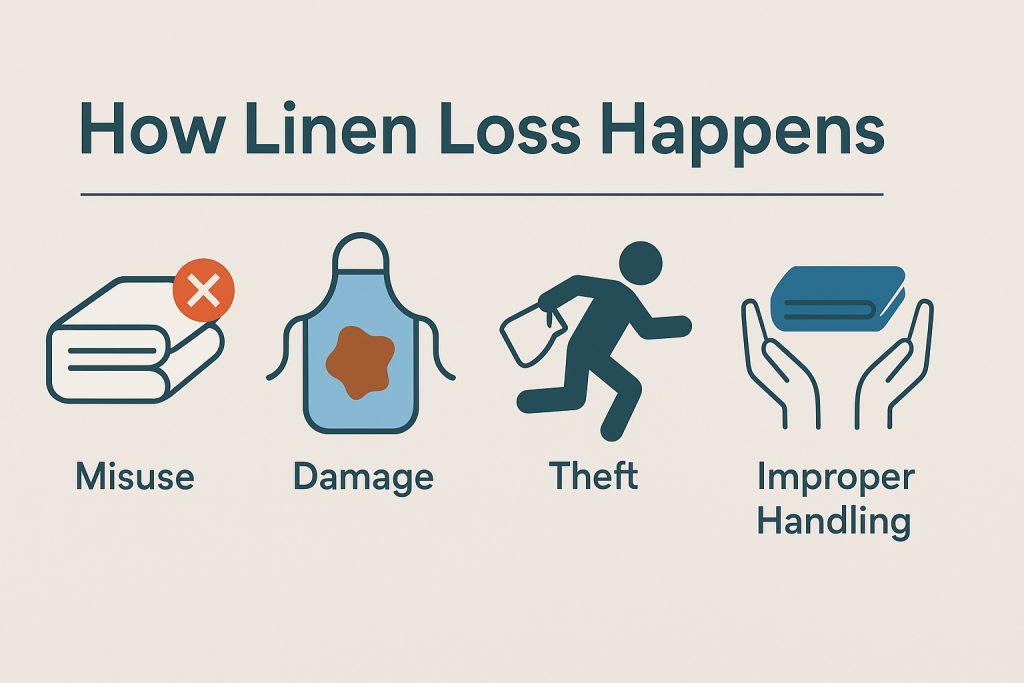
Here are some of the most common ways businesses lose linen:
Accidental Disposal
- Linens are often thrown away with trash during rush hours or shift changes.
- Food-soiled napkins or towels are discarded instead of sent for laundering.
Improper Use
- Staff use high-cost napkins or tablecloths to clean spills instead of designated cleaning towels.
- Mop heads are replaced with bar towels or table linens.
Unsecured Linen Storage
- Linens stored in open areas are more likely to be misused or taken.
- Inventory is grabbed without oversight, leading to uncontrolled consumption.
Linen Theft or Unreturned Items
- Towels and sheets disappear from hotel rooms or patient areas.
- Delivery bins or carts are left unattended and raided.
- Hospital linens are sent with patients when transferring to another facility or when patients are released.
Permanent Damage
- Burns, bleach spots, or excessive staining render linens unusable.
- Incorrect cleaning (for in-house laundry users) shortens linen life.
Why Linen Loss Matters
Even minor weekly losses can lead to significant annual expenses. Beyond cost, linen loss can:
- Disrupt service or patient experience
- Lead to emergency deliveries or shortages
- Affect a business’s reputation (e.g., using mismatched or worn linens)
- Trigger higher replacement fees or contract penalties
Example Cost Impact:
- A single tablecloth can cost $8–$15 to replace.
- Napkins range from $0.75 to $2 each.
- Bar towels and kitchen towels average $1–$3 each.
✅ Linen Loss Prevention Checklist
Use this checklist to train your team and reduce daily losses:
| Task | Complete |
|---|---|
| Store clean linens in a secure, designated area | ☐ |
| Use color-coded towels or signage to separate product type task (e.g., spills vs. guest use) | ☐ |
| Train staff to place soiled linens in designated bins – not trash cans | ☐ |
| Assign a manager to inventory incoming and outgoing linens weekly | ☐ |
| Post reminders in kitchens or back-of-house areas to avoid linen misuse | ☐ |
| Use bar towels and microfiber cloths for cleaning – never napkins or tablecloths | ☐ |
| Review your linen usage and loss trends monthly with your provider | ☐ |
| Educate staff on the actual cost of linen loss | ☐ |
Pro Tips to Reduce Linen Loss
- Designate Specific Linens for Specific Tasks: Use cleaning towels and mops for spills, not guest-facing linens.
- Limit Linen Access: Keep backup inventory in locked cabinets.
- Communicate With Your Linen Service Provider: Partner with your provider to review reports on lost or damaged items and adjust inventory levels accordingly.
- Incentivize Staff: Offer small rewards for teams that reduce waste or maintain linen counts.
- Track High-Loss Items: Review which items are most frequently lost (e.g., bar towels, napkins) and adjust your order or usage guidelines accordingly.
Conclusion: Small Changes, Big Impact
Linen loss may seem like a minor issue, but it can have a major financial and operational impact over time. With the right training, processes, and provider support, you can significantly reduce unnecessary costs.
Addressing the linen loss within your rental service is integral to your program’s service agreement and financial budgeting. Ensure the language is clear and transparent on how you will be billed for excessive losses in your operation of unreturned merchandise. Working with your supplier to maximize your use of products and minimize merchandise losses is the cornerstone of a successful partnership.
At Superior Linen Service, we help customers monitor usage, identify loss trends, and adjust service levels accordingly. Ready to optimize your linen program? Contact us today for a personalized consultation.